Ice Caves in Iceland in Summer: Which Caves You Can Actually Visit

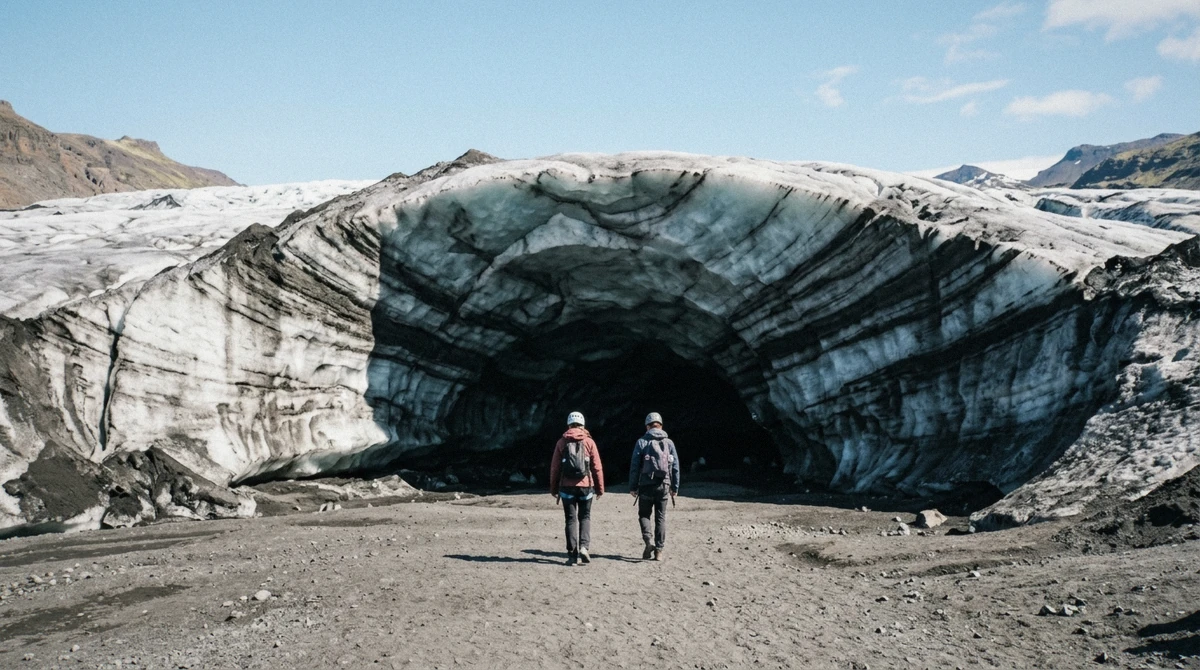
Ice caves in Iceland in summer are real, though fewer travelers realize it than you'd expect. I spent six winters walking visitors into the blue caves on Breiðamerkurjökull, and every June the same question landed in my inbox: does anything stay open once the snow stops falling? Two answers do. The Katla cave under Mýrdalsjökull runs every month of the year, ash-streaked instead of blue, and the man-made Langjökull ice tunnel never closes at all. What does shut down is the crystal-blue cave scene at Jökulsárlón, the one most ice cave photographs online show, because Vatnajökull's ice is not stable enough to enter once the summer melt takes hold.
Quick answer
Two ice caves stay open through summer: the natural Katla cave near Vík, banded with volcanic ash, and the man-made Langjökull tunnel, which holds 0°C year-round. The blue crystal caves inside Vatnajökull National Park, the ones most photos show, close roughly November to March and do not reopen until the ice refreezes.
Key takeaways
- Katla, in Kötlujökull under Mýrdalsjökull, is the only natural ice cave in Iceland open in July and August
- The Langjökull ice tunnel is man-made and never closes, holding a steady 0°C inside all year
- Vatnajökull's blue crystal caves near Jökulsárlón run roughly November to March and close for the summer melt
- Katla's ice is streaked black with volcanic ash rather than uniformly blue, a genuinely different look, not a lesser one
- A 25 August 2024 ice collapse on Breiðamerkurjökull is the reason reputable operators do not run the blue caves in warm months
- Both summer options provide crampons and helmets; you bring your own waterproof hiking boots
The Short Answer: Two Caves Stay Open All Summer
If you are landing in Iceland between May and September and still want to stand inside a glacier, you have two real options, not zero. The Katla ice cave, cut into Kötlujökull, an outlet glacier of Mýrdalsjökull, runs every month of the year and sits outside Vatnajökull National Park, so it is not bound by the park's cave-access rules. The Langjökull ice tunnel solves the season question a different way: it is carved by machine into the glacier cap rather than found and mapped by a guide each week, so there is no ice to destabilize as the weather warms.
What neither of these gives you is the classic postcard cave, the polished blue chamber above Jökulsárlón that most Iceland ice cave photography actually shows. That cave exists, and it is worth seeing, but only in winter. If your dates are fixed for July or August, plan around Katla and Langjökull rather than hoping the blue caves make an exception for you. They will not.
Which Ice Cave Is Open When
Here is the full picture in one table, cave by cave.
| Cave | Type | Open months | Departs from | Book it |
|---|---|---|---|---|
| Katla | Natural, ash-banded ice | Year-round, including July and August | Vík | Katla super jeep from Vík |
| Langjökull ice tunnel | Man-made, bored into the ice cap | Year-round, 0°C inside | Reykjavík, via Húsafell | Into the Glacier day trip |
| Vatnajökull blue caves (Jökulsárlón) | Natural, blue crystal ice | Roughly November to March | Jökulsárlón / Reykjavík | Closed for summer, see Katla from Reykjavík instead |
Notice the pattern: the two caves that stay open in summer are either outside the national park boundary or not natural ice at all. The blue caves inside Vatnajökull National Park are the ones that need winter's cold to hold their shape, and they are the ones every operator pulls from the schedule once the days lengthen.
Why the Blue Ice Caves Close in Summer
The blue caves near Jökulsárlón are carved by meltwater the previous autumn and winter, and they hold their shape only while the ice around them stays cold and load-bearing. Once spring sun starts working on Breiðamerkurjökull's surface, that structural ice softens from the outside in, long before it looks unsafe to an untrained eye. Guides who worked these caves, myself included, watched roof lines and cracks shift week to week through March, and by April the whole system had usually become unpredictable enough to close.
The risk is not theoretical. On 25 August 2024, an ice arch on Breiðamerkurjökull collapsed on a summer tour, killing one American visitor and seriously injuring his wife. It happened outside the normal winter operating season, on ice that had already been softening for months, and it is the single reason every operator with a real safety record refuses to run the blue caves once summer arrives, whatever a smaller outfit might promise online.
Since November 2024, Vatnajökull National Park has required its lead guides to run a daily risk assessment before any group enters a cave, backed by an expert council. Katla and the Langjökull tunnel sit outside the park boundary and outside those specific rules, which is one reason they can keep running year-round rather than pausing for a seasonal safety review the way park-based operators do. For anything specific to your travel dates, check safetravel.is before you go.
The Katla Ice Cave in Summer: What It's Like
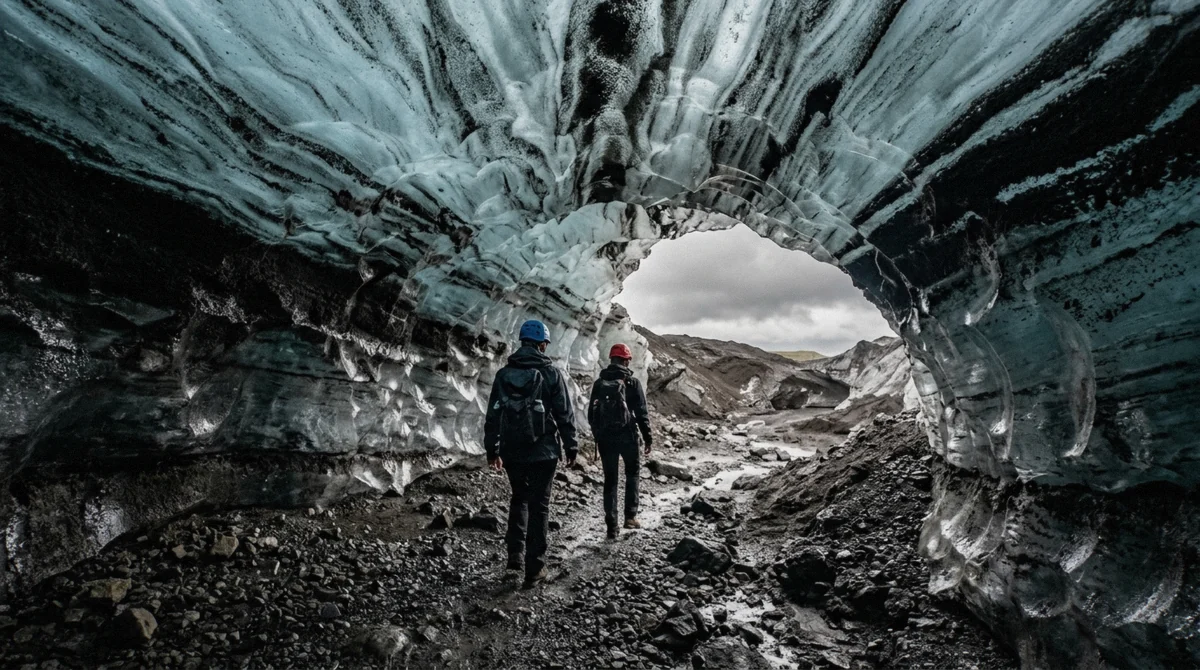
Katla sits in Kötlujökull, an outlet glacier of Mýrdalsjökull, itself the ice cap covering one of Iceland's most closely watched volcanoes. Every eruption over the centuries has dropped a fresh layer of ash on the ice, and every winter since has buried that layer under new snow, which is why the cave walls come out looking like rock strata rather than a clean blue chamber. It is a genuinely different cave from the ones I used to guide on Vatnajökull, not a consolation prize for missing the blue season.
The trip from Vík runs about 40 minutes of off-road driving in a 4x4 super jeep, followed by a roughly 20-minute walk to the cave mouth. Crampons and a helmet come with the ticket. The Katla ice cave tour from Vík costs from $180 (about 22,300 ISK at 1 USD ≈ 124 ISK, checked August 2026), runs 3 hours door to door, and takes a minimum age of 8. It is the single easiest way to stand inside a real ice cave anywhere in Iceland between May and September.
The Langjökull Ice Tunnel: The Man-Made Backup That Never Closes
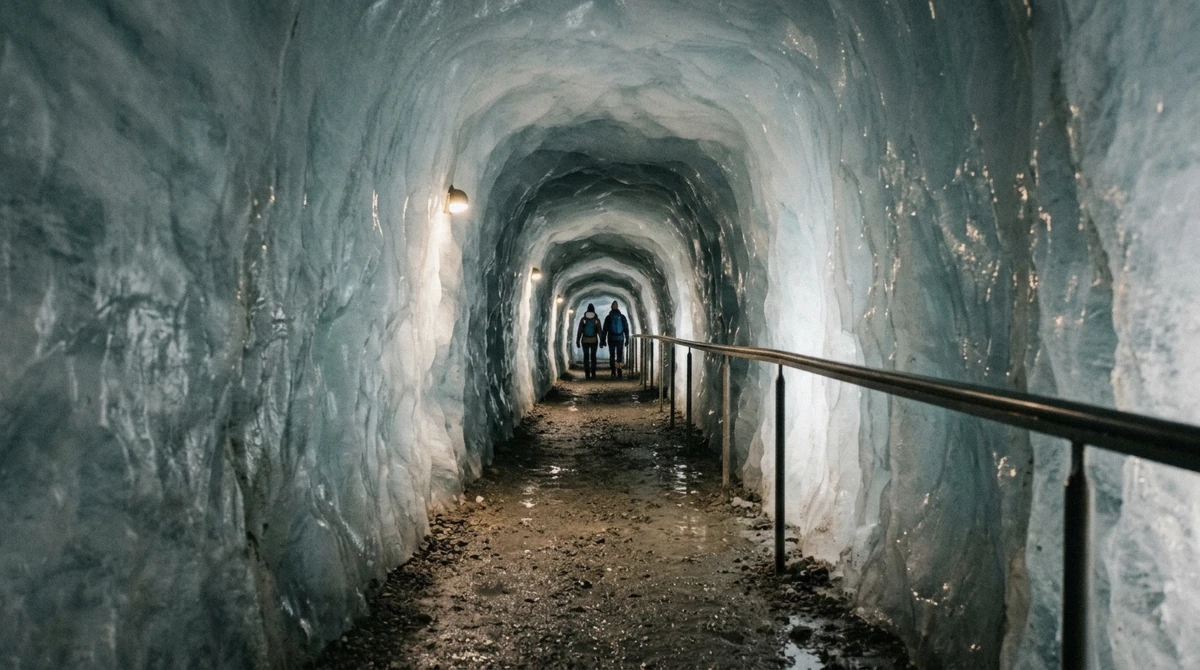
The Langjökull tunnel is a different proposition entirely. It is not a cave that a guide found and mapped, it is a corridor bored by machine roughly 500 m into the ice cap at about 1,260 m elevation, a project that took 14 months to dig and removed around 5,500 m³ of ice along the way. Because the tunnel is engineered rather than discovered, there is no natural instability to wait out and no melt season to close it for. Inside, the temperature holds at 0°C year-round, whether you visit in January or August.
Getting there from Reykjavík means a drive out to Húsafell, then a transfer onto a modified glacier truck for the final climb onto the ice cap, where overalls, overshoes and crampons are handed out. The Langjökull ice tunnel day trip costs from $308 (about 38,100 ISK), runs 11 hours from Reykjavík and back, and has no minimum age, so it works for families the Katla trip's age-8 rule would rule out.
Visiting in the Shoulder Months
October and April sit right on the edge of the blue caves' typical season, and this is where the honest answer gets less tidy. Vatnajökull's crystal caves run roughly November through March, so late October can occasionally have an early cave open and late April can occasionally have a late one hanging on, but neither is something you should plan a trip around. The decision is made week by week by the guides on the ice, based on that season's specific conditions, not by a calendar date.
If your dates fall in one of these edge months, Katla and the Langjökull tunnel remain the reliable bookings, since both run to their own year-round schedule regardless of what the blue caves are doing that particular week. For the latest on conditions and any active weather warnings, vedur.is is the Icelandic Met Office's public forecast and a better source than any fixed date on this page.
Summer Ice Cave Tours Worth Booking
Three tours cover the realistic summer options, depending on where you are starting from and how much of a day you want to give it.
- Katla by super jeep from Vík: the most direct route into an ice cave in summer, 3 hours, from $180 (22,300 ISK)
- South coast waterfalls and Katla from Reykjavík: folds Seljalandsfoss and Skógafoss into a 10-hour day that ends at the same cave, from $272 (33,800 ISK)
- Langjökull Into the Glacier from Reykjavík: the man-made tunnel, 11 hours, from $308 (38,100 ISK), no minimum age
So, Should You Wait for Winter?
Only if the blue crystal look is specifically what you came for, and only if your dates are flexible enough to shift into November through March. If you are set on July or August, waiting buys you nothing, since the blue caves will not open early for anyone. What you get instead with Katla and Langjökull is not a downgrade, just a different kind of cave: one volcanic and ash-streaked, one carved by hand into permanent ice, and both genuinely worth the trip on their own terms.
And if standing on top of the ice appeals as much as standing inside it, glacier hikes run every month of the year too; glacier hike or ice cave walks through that trade-off honestly.
Summer Ice Cave Questions
What is the only natural ice cave in Iceland open during summer?
Katla, cut into Kötlujökull under the Mýrdalsjökull ice cap near Vík. It runs every month of the year, including July and August, because it sits outside Vatnajökull National Park's boundary and seasonal cave-access rules.
Why do the Vatnajökull blue ice caves close for summer?
Rising temperatures soften the ice from the outside in, making roof lines and structural sections unstable in ways that are hard to judge by eye. Reputable operators stop running these caves roughly November through March for that reason, and a fatal collapse in August 2024 confirmed why.
Is the Langjökull ice tunnel a real ice cave?
It is a real tunnel cut into real glacier ice, but it is man-made rather than a natural cavity, bored roughly 500 m into the ice cap at about 1,260 m elevation. That engineering is exactly why it can stay open all year with no melt season to worry about.
When do the blue crystal caves near Jökulsárlón reopen in autumn?
Typically sometime in November, though the exact date depends on that season's ice conditions and is decided by guides on the ground rather than a fixed calendar date. Late October occasionally sees an early opening, but it is not something to plan a trip around.
Does the Katla cave look like the blue caves at Jökulsárlón?
No, and that is worth knowing before you book. Katla's ice is streaked black with volcanic ash from Mýrdalsjökull's eruptions, a striking layered look rather than the clean blue of the winter crystal caves. Different, not lesser.
How much does a summer ice cave tour cost from Reykjavík?
The south coast and Katla day tour from Reykjavík runs from $272 (about 33,800 ISK), 10 hours including waterfall stops. The Langjökull tunnel trip runs from $308 (about 38,100 ISK) for 11 hours. Meeting Katla directly in Vík instead costs from $180 (about 22,300 ISK).
Summer in Iceland does not mean skipping the glacier entirely. It means choosing between two caves that earn their place on the itinerary rather than settling for whatever happens to be open. Compare the full lineup of Iceland ice cave day tours if you are still weighing your options against a winter trip instead.