Iceland Ice Cave Day Tour: Every Cave, and When It Opens
Blue ice the colour of deep water sits under Breiðamerkurjökull from November, while the ash-streaked Katla cave stays open through August. Every Iceland ice cave day tour here shows its cave, its meeting point and its price, and cancels free 24 hours out.
An Iceland ice cave day tour costs $161 to $308 per person and runs 3 to 11 hours, depending on where it starts. The blue caves inside Vatnajökull open roughly November to March and meet at Jökulsárlón or Skaftafell, a five-hour drive from the capital. The Katla cave under Mýrdalsjökull, reached by super jeep from Vík, is the one that runs year-round.
Key takeaways
Cheapest cave: $161 for 3 hours at Jökulsárlón with the family operator that opened the first cave here, rated 4.6 from 1,129 reviews
Most booked: the Jökulsárlón glacier walk and ice cave at $164, with 2,171 reviews behind it
Travelling in summer: Katla is your only natural cave, $180.03 by super jeep from Vík or $272.32 as a full day from Reykjavík with the south coast waterfalls
Nothing to cancel: the man-made Langjökull ice tunnel, $307.65 from Reykjavík, open all year and open to any age
Snowmobile and ice cave in one day: Langjökull snowmobile tours ride to a natural cave on the ice cap from $296
Every tour on this page cancels free up to 24 hours before departure, and none of them asks for payment today
Free cancellation 24h
Reserve now, pay later
Crampons and helmet provided
Licensed glacier guides
$161Cheapest cave tour, three hours
380 kmReykjavík to Jökulsárlón, one way
November to MarchSeason for the natural Vatnajökull caves
8 and 10Minimum age across these cave tours
top pick
The Cave Tour with the Longest Track Record
Jökulsárlón Blue Ice Cave with the Original Glacier Operator
★★★★★★★★★★4.6(1,129 reviews)
Meet at Jökulsárlón, ride a modified 4x4 onto Breiðamerkurjökull and walk 1 to 5.5 km to whatever blue feature the ice has opened this week. Run by Local Guide of Vatnajökull, the family operator that started ice cave tours here.
Duration
3 hours, 2.5 to 4 in practice
Meeting Point
Jökulsárlón glacier lagoon, southeast Iceland
Included
Modified 4x4 to the ice, crampons, helmet, harness, guide
Price Range
$161 per person, boots available to rent at the meeting point
Live availability for the $161 cave tour on Breiðamerkurjökull. Departures run through the winter season and fill first at weekends and over the Christmas fortnight.
Iceland Ice Cave Tours, by Cave and Starting Point
Four of these meet you at the glacier, three collect you in Reykjavík. That single difference is worth more than any other detail on this page: the cave-side tours cost half as much and give you the same cave.
from $161
Jökulsárlón Blue Ice Cave with the Original Glacier Operator
★★★★★★★★★★4.6(1,129 reviews)· 3 hours
Meet at Jökulsárlón, ride a modified 4x4 onto Breiðamerkurjökull and walk 1 to 5.5 km to whatever blue feature the ice has opened this week. Run by Local…
Vatnajökull Ice Cave and Glacier Walk from Jökulsárlón
★★★★★★★★★★4.2(2,171 reviews)· 3 hours
The most-booked cave tour on this page: jeep transfer from the Jökulsárlón car park, then an hour and a half of guided walking on Vatnajökull with time inside…
2,171 reviews, the biggest review count of any tour here
South Coast Waterfalls and the Katla Ice Cave, from Reykjavík
★★★★★★★★★★4.7(744 reviews)· 10 hours
Seljalandsfoss, Skógafoss, Reynisfjara black sand and half an hour inside the Katla cave, with an hour of off-road driving at each end of the cave stop. Twenty pickup…
The only tour here that reaches a cave and the south coast in one day
Into the Glacier: Langjökull Ice Tunnel Day Trip from Reykjavík
★★★★★★★★★★4.5(196 reviews)· 11 hours
Pickup in Reykjavík, a run out to Húsafell, then a modified glacier truck up onto Langjökull to the entrance of the world's largest man-made ice tunnel. Overalls, overshoes…
The one cave that never depends on the weather outside
Children of any age can join if a parent can carry them
Sort this table by where you will actually be that morning. If you are sleeping in Reykjavík and driving nowhere, three of these are open to you; if you are driving the Ring Road, the cheaper four are.
Glacier gear is included on every tour here. Warmth, footwear and the drive are yours to sort out, and they are what ruin more cave mornings than anything else.
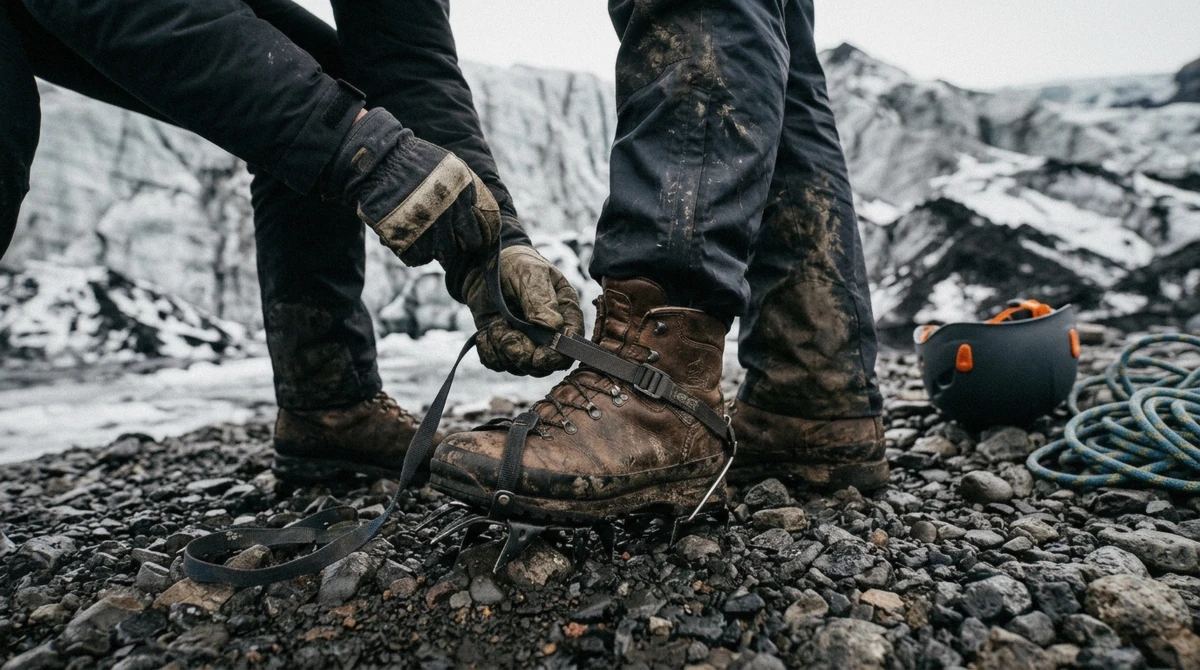
IncludedCrampons, helmet, headlampEvery operator here hands these out at the ice. Skaftafell adds a harness and a walking ice axe for the Falljökull hike
YoursHiking boots above the ankleMandatory on the glacier hikes, and crampons will not clamp onto trainers. Jökulsárlón rents boots at the meeting point; Skaftafell turns people away without them
$0Cancellation up to 24 hoursFull refund on every tour here. After that window you are refunded only if the operator cancels the departure
5 hoursDrive from Reykjavík, each wayCave-side tours assume you are already in the southeast. Add fuel and a rental car to the $161 if you are not
Age 8Every cave tour on this pageBoth Katla tours and the Skaftafell hike list 8 as the floor; the original Jökulsárlón tour asks for 10, and only the Langjökull tunnel takes carried infants
30 to 90 minActual time inside the iceThirty minutes in the Katla cave on the south coast day, about ninety on the Jökulsárlón glacier walk, an hour on the two-day trip
Ice Caves in Iceland You Can Actually Book
Breiðamerkurjökull: the crystal and blue caves above Jökulsárlón
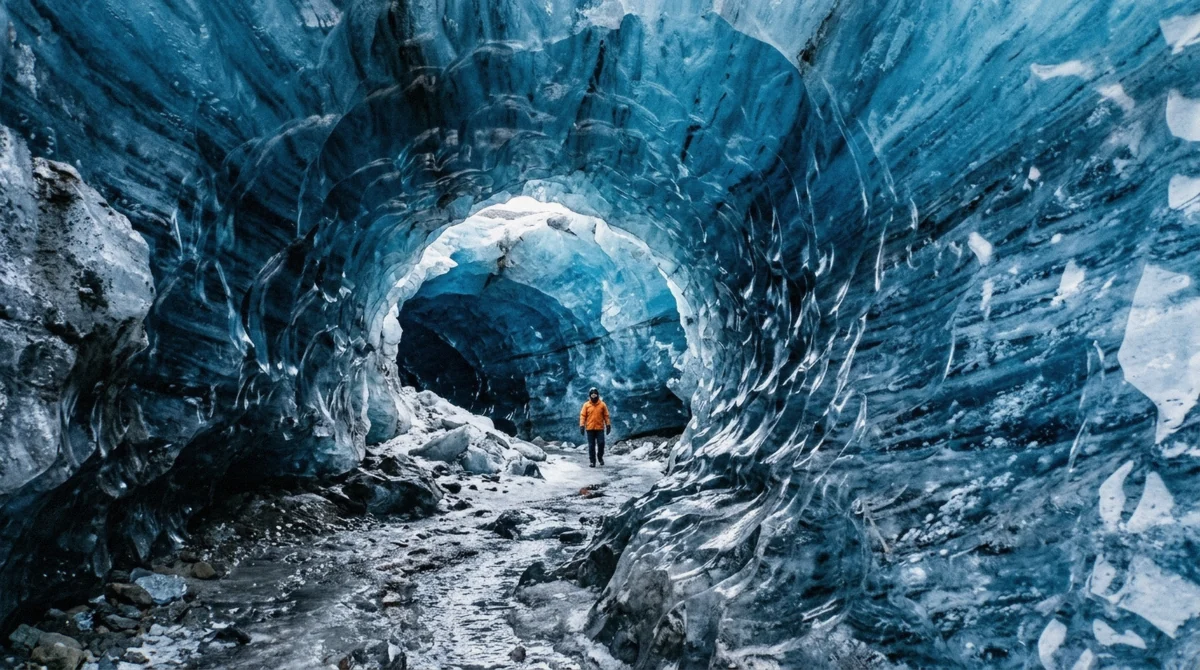
This is the ice in the photographs. Breiðamerkurjökull is an outlet of Vatnajökull, the largest glacier in Europe by volume, covering about 8% of the country, and it ends in the lagoon at Jökulsárlón. Guides drive modified 4x4 trucks off the Ring Road and onto the moraine, then walk you anywhere from 1 to 5.5 km depending on which cave has held up.
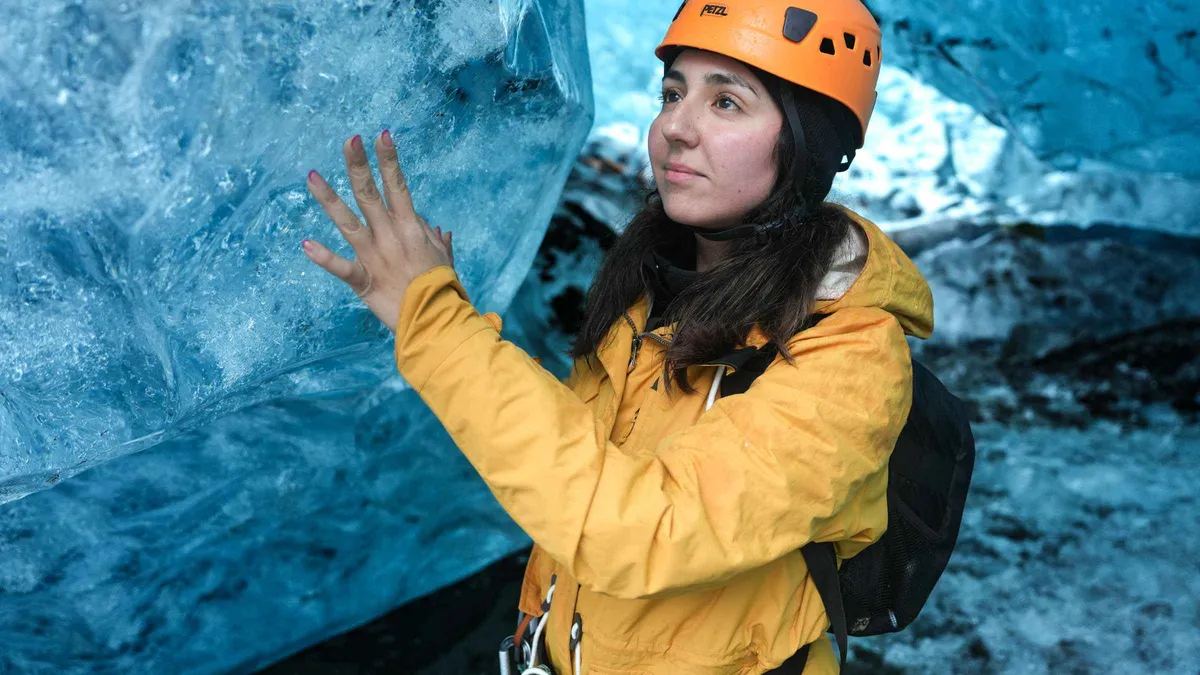
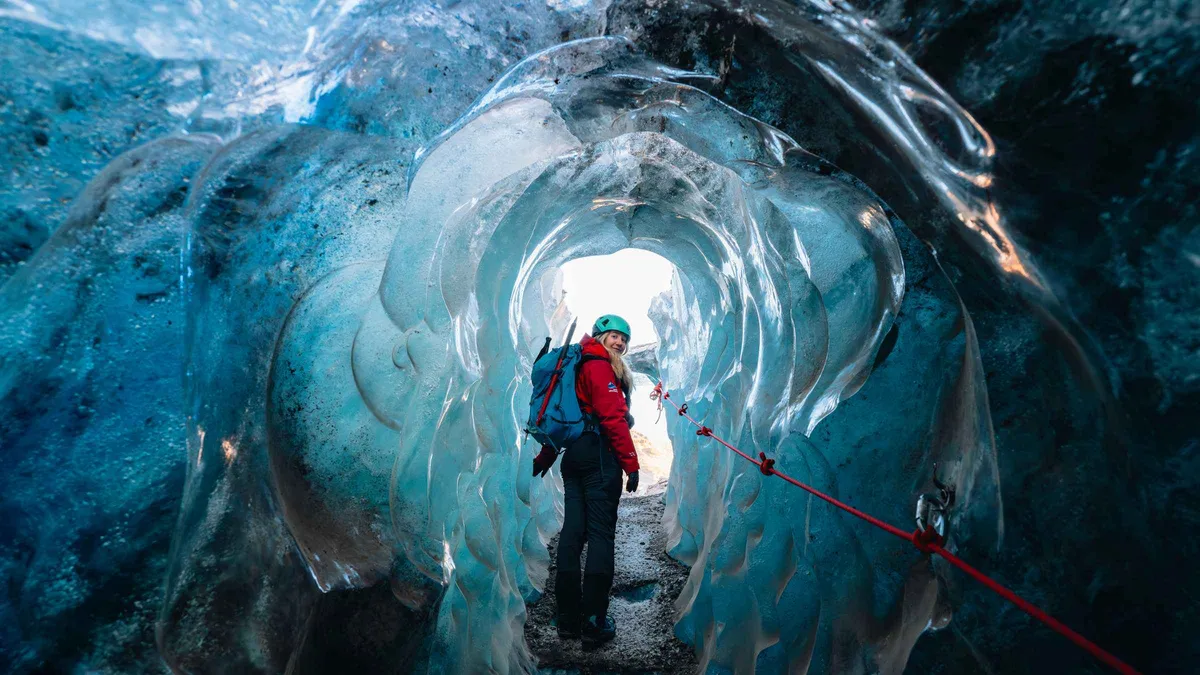
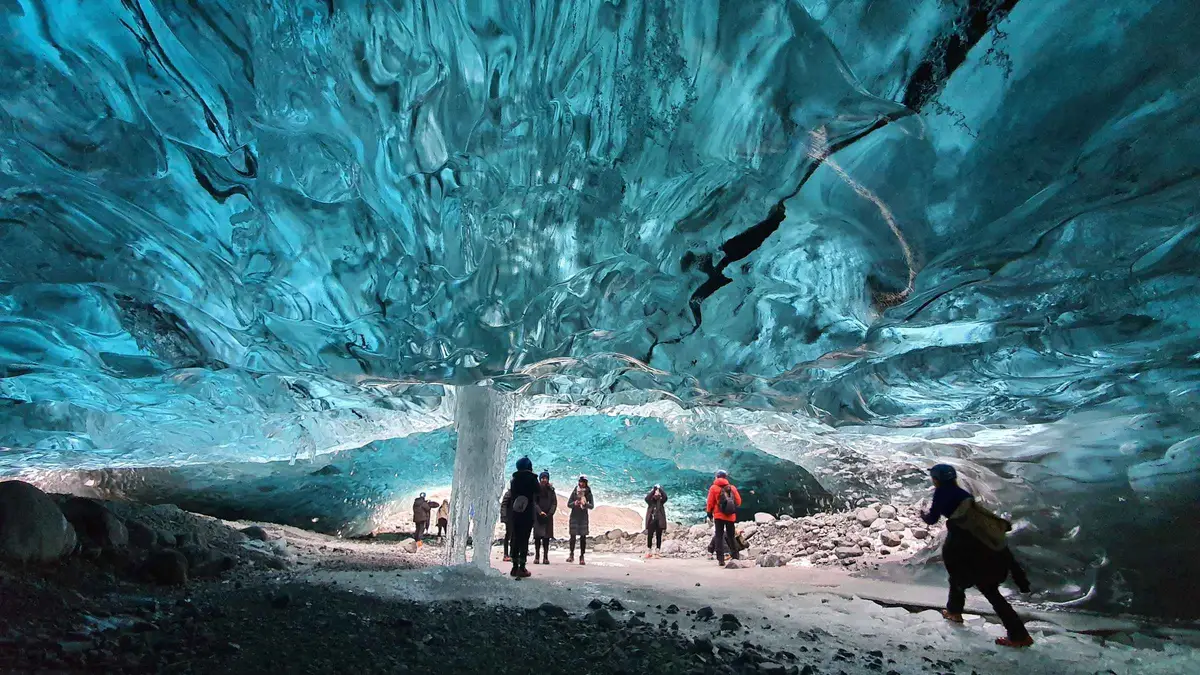
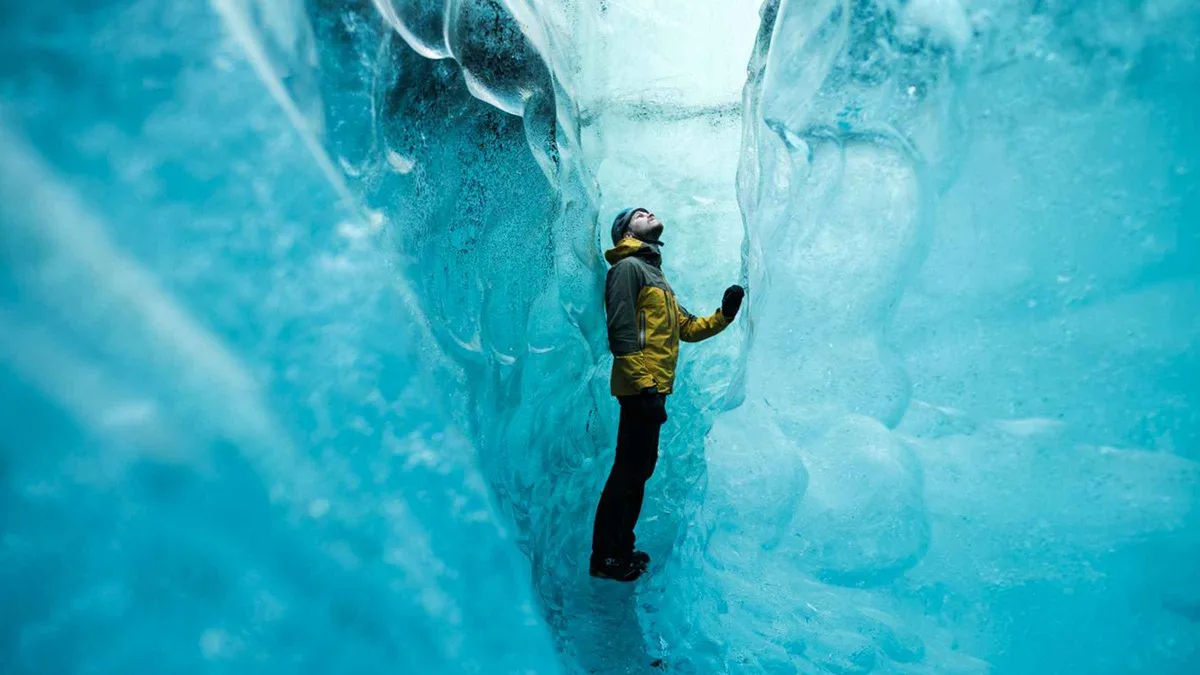
What you get is a cave, a tunnel or a canyon of compressed ice with no air bubbles left in it, which is why it reads blue rather than white. Tours run roughly November to March here, and the shape changes every winter, so the cathedral you saw on Instagram in February may be a low crawl or a collapsed roof by the time you arrive. Operators say this in their own listings, and the honest ones publish daily cave conditions.
Both Jökulsárlón departures cost about the same: $161 for the three-hour original tour, $164 for the most-booked one. Neither includes a lift from Reykjavík, and the differences between them are set out in the guide to the two crystal cave tours at the lagoon.
Katla: the black-streaked cave that stays open in summer
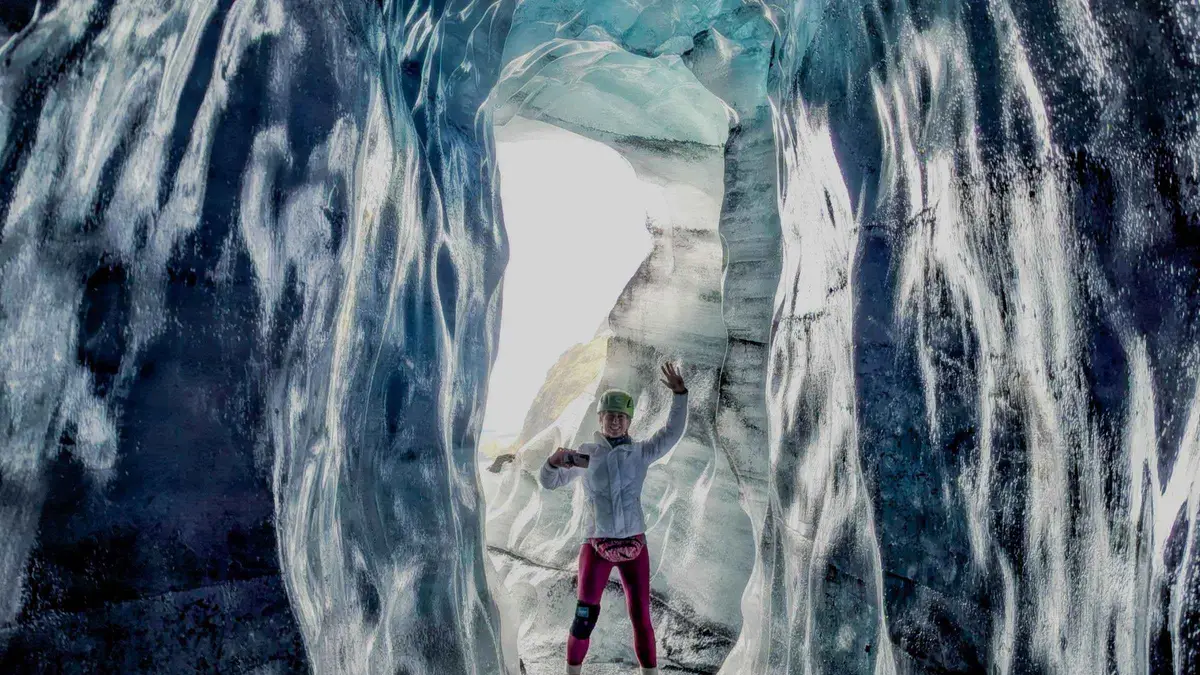
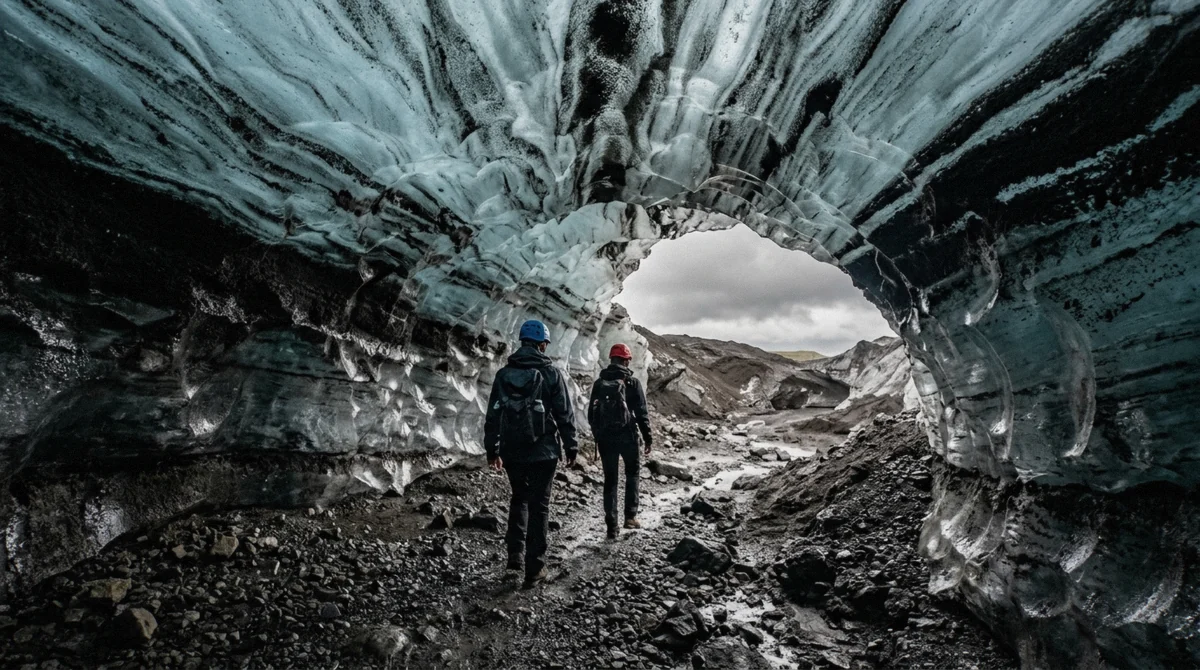
Katla sits under Mýrdalsjökull, which caps an active volcano, and each eruption has left a layer of ash in the ice. Where Breiðamerkurjökull is pure blue, Katla is striped: grey and black bands folded through blue ice, closer to marble than glass.
It is the cave that solves the summer problem. Tours run year-round, and in July or August it is the only natural ice cave in Iceland you can walk into. From Vík a super jeep leaves the seafront, climbs a rural track for about an hour into the highlands, and drops you two to eight minutes' walk from the entrance; you are back in Vík three hours after leaving. That trip costs $180.03. The Reykjavík version is a ten-hour day at $272.32 that folds in Seljalandsfoss, Skógafoss and the black sand at Reynisfjara, with 30 minutes inside the cave itself.
The cave is smaller than the Vatnajökull ones. One traveller's review of the south coast day puts it plainly: you walk in, turn around and walk out. It is still ice you can stand inside in August. Full detail on the three-hour trip from Vík and on the ten-hour version with the waterfalls.
Skaftafell and Falljökull: the one that is really a glacier hike
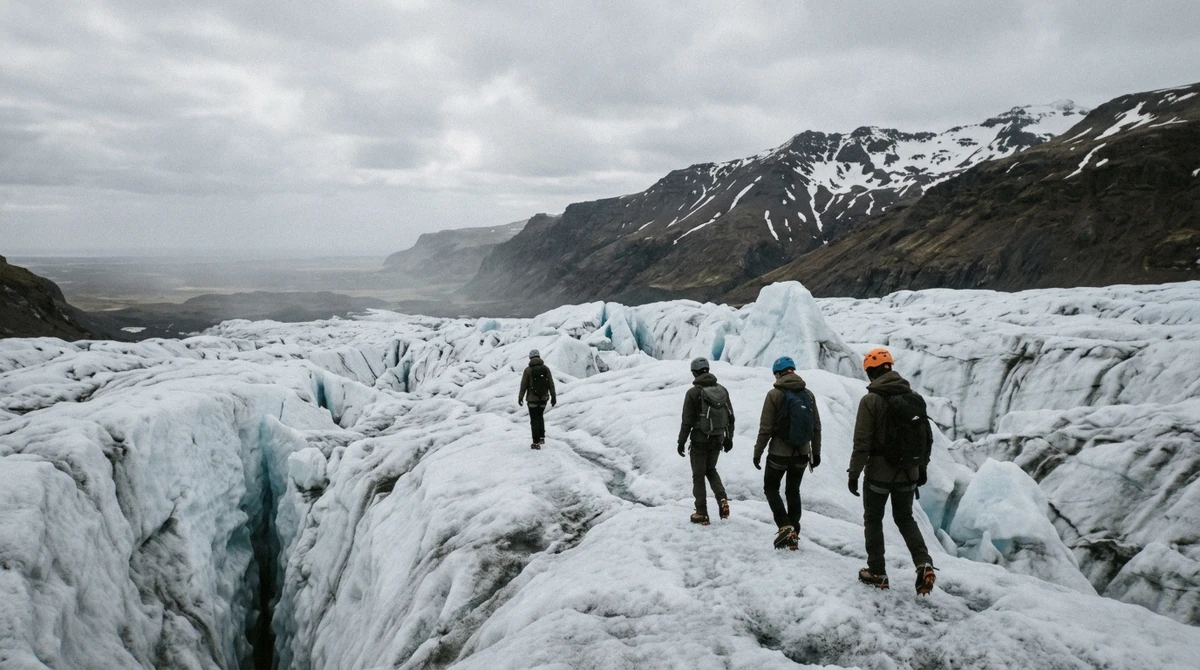
From Skaftafell base camp a 4x4 bus runs 20 minutes to the foot of Falljökull, and then you are on the ice for about two and a half hours. This is the tour for people who want the walking as much as the cave: ridges, meltwater channels and moulins, the vertical shafts where summer water drills down through the glacier.
Groups cap at twelve per guide, the minimum age is 8, and boots with ankle support are not a suggestion. Crampons, helmet, harness and a walking ice axe come with the ticket. Four hours, $165.22, and it runs in the same November to March window as the caves above the lagoon. The walk across Falljökull is covered step by step in its own guide.
Langjökull: the ice tunnel that never closes
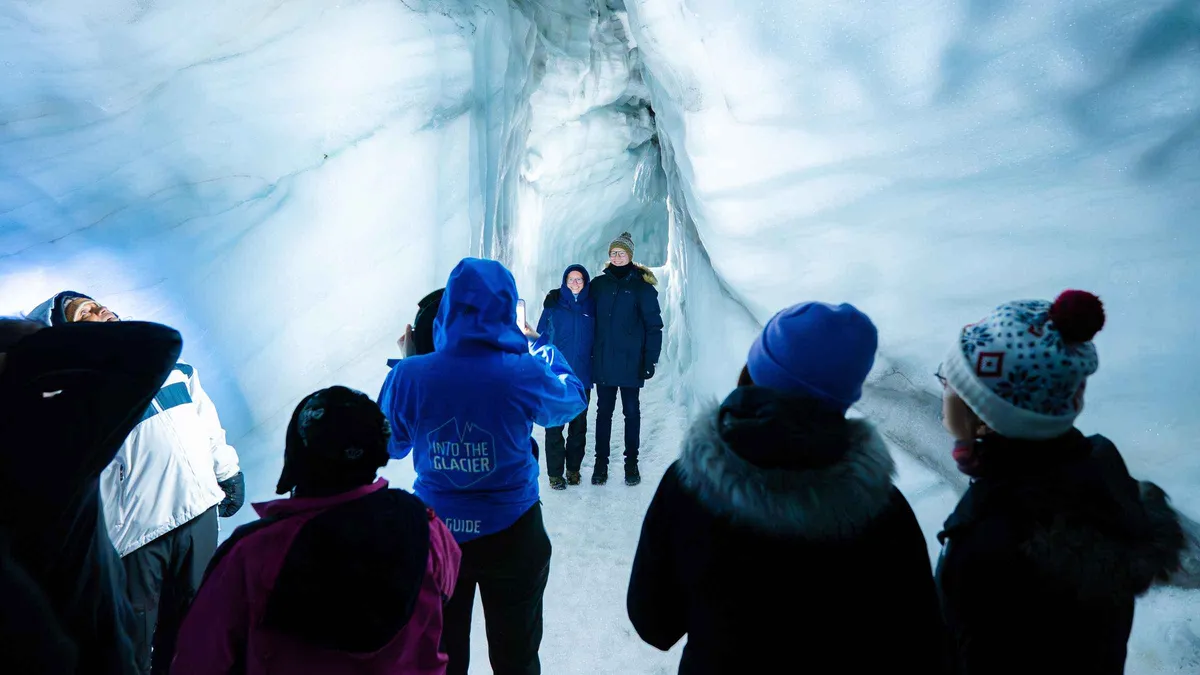
Into the Glacier is not a natural cave at all. It is a man-made ice tunnel bored into Langjökull, Iceland's second largest ice cap, about 500 metres of corridor and chambers lit from behind the walls. Because engineers cut it and maintain it, weather in the ice above matters far less: it runs year-round, takes children of any age who can be carried, and gives you the one blue-ice experience in the country that a warm winter cannot cancel.
The day from Reykjavík is long. Pickup in the city, a run out to Húsafell, warm overalls and a modified glacier truck up onto the ice cap, then the tunnel, and back: eleven hours for $307.65, with the transfer and the gear in the price, and the full day inside the ice tunnel is broken down separately. Fair reviews mention the stops on the way, a hot spring and a horse farm, filling out a day that is really about twenty minutes of driving on a glacier and an hour underneath it.
Langjökull by snowmobile: a natural cave on the ice cap
The Langjökull caves are a second, less-known kind of natural ice cave. Operators on the ice cap find a new one each season and reach it by snowmobile from base camps near Geysir and Gullfoss, or from Reykjavík in a ten-hour day. The ice is white and blue striped with volcanic ash, and the snowmobile ride is part of the ticket: two riders share a machine, and whoever drives needs a valid driver's licence.
Prices start at $296 from Gullfoss and run to $397 with a Reykjavík pickup. Reviewers put the actual riding at 30 minutes to an hour. The Langjökull snowmobile and ice cave tours are compared side by side, including the Húsafell combo that swaps the natural cave for the Into the Glacier tunnel.
Inside Iceland's Ice Caves: What Each One Looks Like
Real photographs of the caves these tours visit: the blue Vatnajökull caves above Jökulsárlón and Skaftafell, and the man-made tunnel in Langjökull. Each shape lasts one winter at most. Every image is freely licensed and credited to its photographer.
Average daytime temperature on the south coast, month by month, with the window each cave actually operates in. Inside the ice it stays close to 0°C (32°F) whatever the bar says.
1°C34°F
JanuaryJan
1°C34°F
FebruaryFeb
2°C36°F
MarchMar
4°C39°F
AprilApr
7°C45°F
MayMay
10°C50°F
JuneJun
11°C52°F
JulyJul
11°C52°F
AugustAug
9°C48°F
SeptemberSep
5°C41°F
OctoberOct
3°C37°F
NovemberNov
1°C34°F
DecemberDec
Vatnajökull blue caves, Jökulsárlón and Skaftafell
Katla cave, Vík
Langjökull ice tunnel, Húsafell
December and January give the darkest skies, the most reliable cave ice and the northern lights window on top; late March and April are warmer to stand around in, but the caves start dripping and some close early. One traveller in early May found the cave melting the day before the operator shut for the season.
Where the Caves Are
Four starting points, spread over 400 km of road. The cluster in the southeast is what most people mean by an ice cave in Iceland; Vík and Húsafell are the two you can reach without committing a whole day to driving.
Natural winter caves
Open all year
How an Ice Cave Turns Up, and Then Disappears
A natural cave is last summer's plumbing. Meltwater cuts the tunnel, winter drains it, and the guides go looking for it in November.
1
Summer: meltwater drills in
Water pools on the surface, finds a crack and carves a vertical shaft, the moulin, then a tunnel along the glacier bed
2
Autumn: the water switches off
Temperatures drop, melting stops, and the tunnel drains and refreezes into a walkable void
3
November to March: guides find it
Scouts check outlets for a stable roof and an accessible entrance. A cave that passes gets a route; one that does not is left alone
4
Spring: it drips, sags and closes
Melt returns, the roof thins and the same cave is shut. Next winter the ice has moved several tens of metres and the cave is somewhere else
This is why no operator can promise you a specific cave, and why the ice you stand inside was liquid water eighteen months ago.
What People Say After the Cave
★★★★★★★★★★
I took part in a tour at the end of April. We were given all the necessary safety equipment. Divided into small groups of 10. Then, transported to the glacier in a gigantic off-road truck. The hike itself was just spectacular, with a near constant view over the glacier lagoon. […] He brought us around to all the different features on the glacier, then gave us our own individual time inside the blue cave!
Ronan · Ireland, May 2026
★★★★★★★★★★
You got to see waterfalls, Vik, black sand beach and the ice cave. The scenery to and around the ice cave was also beautiful! The ice cave isn't long, you walk in & turn around and walk out. Still definitely worth doing in my opinion. A great experience!
Kayla · United States, June 2026
★★★★★★★★★★
We did go the day before they closed for the season so the ice caves were melting but we still ended up being able to see what was left which was absolutely beautiful. […] Our tour guide was amazing and super informative about the glacier, ice caves and surrounding mountains.
Ashley · Canada, May 2026
Quotes come from the GetYourGuide listings for the tours on this page, reproduced as written. Shortened quotes are marked with an ellipsis.
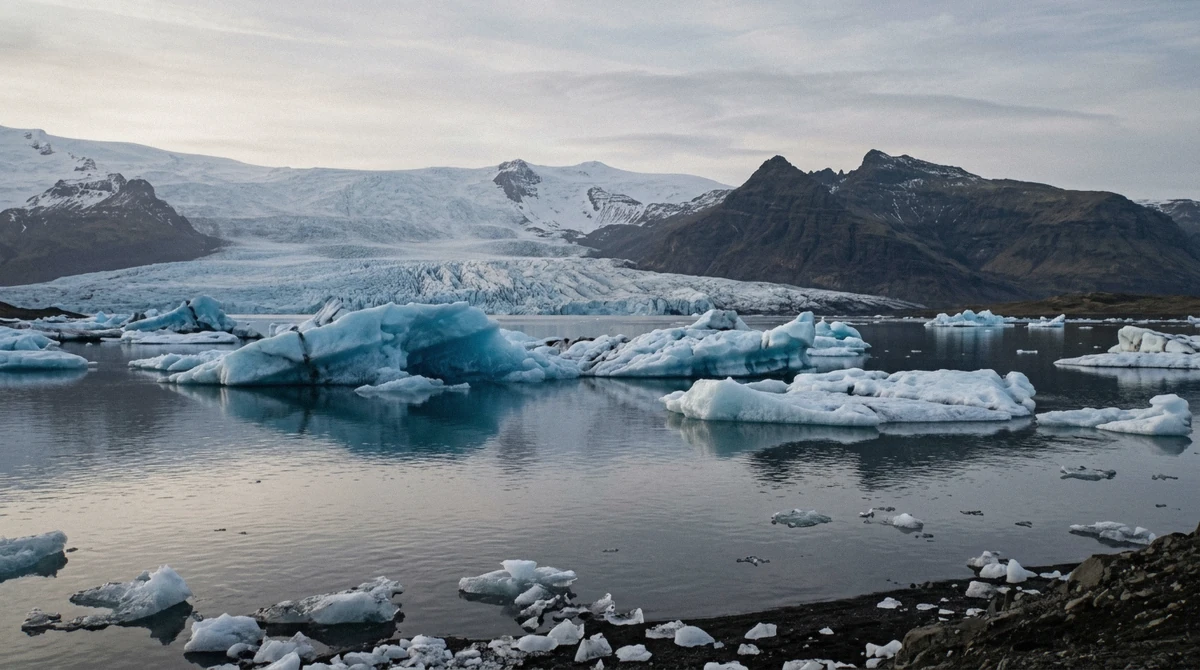
Jökulsárlón is where the cheap cave tours meet. The ice floating here calved off Breiðamerkurjökull, the same outlet glacier the caves are cut into.
Reading These Tours Before You Book One
Start point decides the price
Meet the guide at the glacier and a cave costs $161 to $180. Be collected in Reykjavík and the same cave costs $272 to $308, because you are paying for ten hours of driving.
Nobody can promise you a cathedral
Operators write it into their own listings: the feature may be a cave, a tunnel or a canyon. Book the guide and the glacier, not the photograph on the listing.
Review counts, not review scores
Everything here sits between 4.2 and 4.7. The gap comes from how big the cave was that week, so a tour with 2,171 reviews at 4.2 tells you more than a new listing at 5.0.
Book the cave early in your trip
Wind and unstable ice cancel departures with little notice. If the cave is your last morning in Iceland, a cancellation means a refund and no cave.
Boots are the usual reason people are turned away
Crampons need a stiff sole and an ankle. Rentals exist at Jökulsárlón; the Skaftafell hike lists sturdy boots as mandatory and means it.
Summer changes the answer entirely
From May to September the Vatnajökull caves are shut. Every cave tour on this page are what remain, and both are worth the trip on their own terms.
Safety, and What Changed After August 2024
You cannot legally or safely go in without a guide
Every cave on this page is entered with a licensed operator. Guides from the Association of Icelandic Mountain Guides assess each site daily, checking roof thickness and the ice above the entrance before any group walks in. Going without a guide is prohibited inside Vatnajökull National Park and reckless everywhere else: the entrances move, the roofs thin without warning, and there is no signage on a glacier.
The practical version of that rule is what to wear. Operators supply crampons, a helmet and a headlamp. You bring thermal base layers, a fleece, a waterproof jacket and trousers, gloves, a hat and hiking boots with ankle support. The park's current cave rules are published by Vatnajökull National Park.
Thermal base layer, wool or synthetic, never cotton
Fleece or wool mid layer
Waterproof jacket and waterproof trousers
Hiking boots above the ankle, stiff enough for crampons
Gloves, hat, and a buff for the drive on the ice
Sunglasses in spring, when the glacier throws light back at you
The collapse that rewrote the rules
On 25 August 2024 part of an ice cave gave way at Breiðamerkurjökull during a summer tour of 23 people. One American visitor was killed and his wife was seriously injured. Guides had warned for years that selling Vatnajökull cave tours outside the cold months was pushing the ice too far.
Vatnajökull National Park suspended ice cave tours inside its boundary and a government task force examined why those warnings went unheeded. Stricter terms took effect that November: operators must run a daily assessment group led by an experienced guide, and any site the group judges unsafe is closed for the day, for everyone. The practical result for you is the calendar on this page.
The Vatnajökull caves are a winter product again, and no operator sells them in August.
The rules stop at the park boundary
Those terms apply inside Vatnajökull National Park. Katla, Langjökull and Sólheimajökull sit outside it, where cave tours are covered by operator practice and mountain-guide standards rather than park regulation.
That is not an argument against them. The Katla operators run small groups, keep their own cave and hold licences, and the Langjökull tunnel is an engineered structure inspected as one. It is an argument for reading who runs the tour: check the operator name on the listing, the group size and whether the company publishes conditions. A cancellation for weather is a good sign, not a bad one.
The Ice Before You Book It
Three clips filmed inside the caves on this page: a Reykjavík guide's rundown of the whole season, the crystal cave above Jökulsárlón, and a visitor's own footage from Katla.
Iceland's Ice Caves: Everything You Need to Know Before You Go
Wake Up Reykjavik walks through which caves open when, and what the tours from the city actually involve.
Video: YouTube
Inside the Crystal Ice Cave Tour
Arctic Adventures films the blue ice above Jökulsárlón, including the truck ride onto the moraine.
Video: YouTube
Katla Ice Cave Tour In Iceland: What It's Really Like
A travelling couple shoots the Katla cave on a wind-hammered day, with no operator behind the camera.
Video: YouTube
Videos load only after you click, and play through youtube-nocookie.com.
Your guide
Elín Bjarnadóttir
Former Vatnajökull glacier guide · guiding on Breiðamerkurjökull and Sólheimajökull since 2016
Six winters guiding blue ice caves and glacier hikes on Vatnajökull's outlet glaciers before writing full time. Still walks the Skaftafell routes every season, and reads the operators' small print so you do not have to.
Questions People Ask Before Booking
Which ice cave tour is best in Iceland?
For blue ice, the Breiðamerkurjökull caves reached from Jökulsárlón, at $161 for three hours. For a summer trip, the Katla cave from Vík at $180.03, because it is the only natural cave open in July and August. For anyone who cannot risk a cancellation, the man-made Langjökull ice tunnel at $307.65. There is no single best cave: the right one is set by the month you travel and where you sleep the night before. The full Katla vs crystal cave comparison settles the choice cave by cave.
Can you see ice caves in Iceland without a tour?
No. Entering an ice cave without a guide is prohibited inside Vatnajökull National Park and unsafe everywhere else. Caves are assessed daily by certified glacier guides from the Association of Icelandic Mountain Guides, who check the roof and the ice above the entrance before a group goes in, and close the site when it fails. Entrances also move from season to season, so a location from an old blog post may not exist.
Is the ice cave in Iceland worth it?
Yes, if you book the right one for the month. Compressed glacier ice with no bubbles in it reads deep blue in a way no photograph handles well, and standing under it takes ten minutes to sink in. Set your expectations by size: the Katla cave is short, you walk in and back out, while the Vatnajökull caves come with a glacier hike of 1 to 5.5 km. Reviewers who were disappointed almost always expected a cathedral.
When is the best time to visit ice caves in Iceland?
November to March for the blue caves in Vatnajökull, above Jökulsárlón and at Skaftafell. December and January give the most reliable ice, while late March and April are milder but the caves start dripping and some close early. In summer only the Katla cave from Vík and the man-made Langjökull tunnel run. The summer ice cave guide sets out what is open month by month.
Which ice caves are open in summer?
Two. The Katla cave under Mýrdalsjökull runs year-round from Vík, and the man-made Langjökull ice tunnel is open every month. The natural blue caves inside Vatnajökull operate roughly November to March and are closed through the summer, a line the park drew firmly after the fatal collapse at Breiðamerkurjökull. Month-by-month detail is in the guide to ice caves in Iceland in summer.
How much does an Iceland ice cave day tour cost?
From $161 per person if you meet the guide at the glacier, and $272 to $308 if a bus collects you in Reykjavík. The Skaftafell blue ice cave and glacier hike is $165.22 for four hours, Katla from Vík is $180.03, and the two-day south coast trip with a night near Jökulsárlón is $728.09 including the hotel and breakfast. Glacier gear is in every price.
Can you do an ice cave day tour from Reykjavik?
Yes, three ways. The south coast and Katla day runs 10 hours for $272.32 and takes in Seljalandsfoss, Skógafoss and Reynisfjara. The Langjökull ice tunnel day runs 11 hours for $307.65. A Vatnajökull cave as a day trip from the city is harder, because Jökulsárlón is 380 km and about five hours' drive each way, which is why the blue ice cave usually comes as a two-day trip with a night by the glacier at $728.09. Every realistic option is compared in the ice cave day trip from Reykjavík breakdown.
What is the minimum age for an ice cave tour?
Eight on the Katla cave from Vík, the Reykjavík south coast day and the Skaftafell glacier hike. Ten on the original Jökulsárlón cave tour, which walks up to 5.5 km on the ice. The Langjökull ice tunnel is the exception: children of any age can join if a parent can carry them for up to an hour.
What should I wear inside an ice cave?
The air sits close to 0°C (32°F) year-round, so dress for a cold, wet walk rather than a cave: thermal base layers, a fleece, a waterproof jacket and trousers, gloves and a hat. Hiking boots with ankle support are the one item operators refuse to bend on, because crampons will not hold on trainers. Jökulsárlón rents boots at the meeting point. Crampons, helmet and headlamp come with the tour.
What happens if the tour is cancelled?
High wind, heavy rain or an unstable roof will cancel a departure, and the operator either reschedules you or refunds the booking. You can also cancel yourself up to 24 hours before departure for a full refund on every tour here. Book the cave for the start of your trip so a cancelled morning still leaves you a second chance.
How long are you actually inside the cave?
Less time than the tour length suggests. Around 30 minutes in the Katla cave on the south coast day, roughly 40 to 90 minutes on the Vatnajökull tours where the glacier walk is part of the experience, and about an hour on the two-day trip. The rest is driving, gearing up and the hike in. The step-by-step of the whole day is in what to expect on your first ice cave tour.
Pick the cave that matches your month, then let the guides pick the entrance on the day.
 from $161